A Contractor Platform Enlists PayEngine for SoftPOS

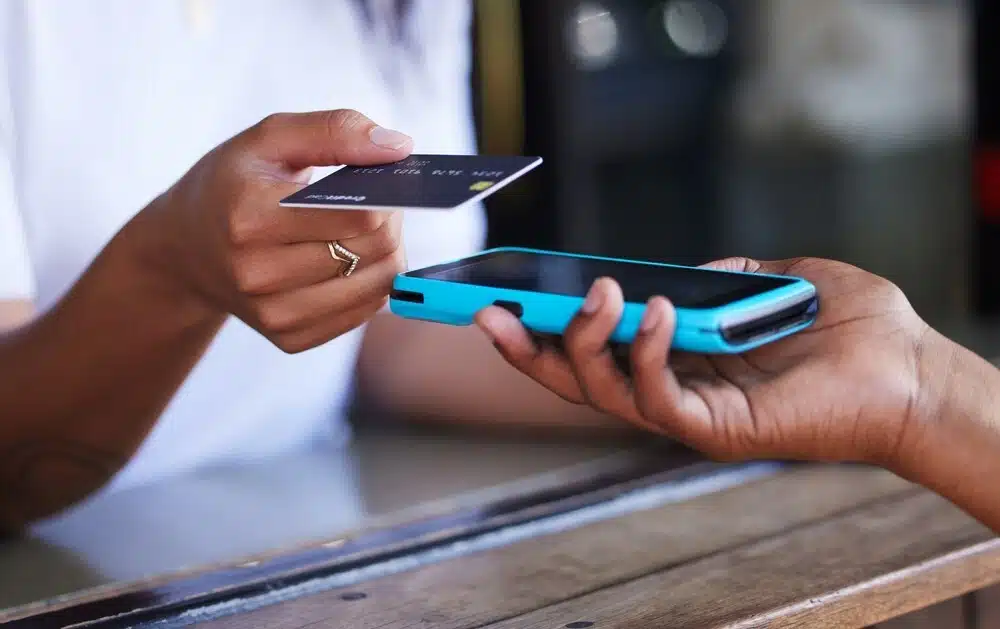
Payments-technology provider PayEngine will enable its softPOS tap-to-pay service with ServiceTitan Inc., a software developer for contractors in the HVAC, plumbing, electrical, and other service sectors.

Santa Monica-based PayEngine says this means consumers will be able to pay their contractor invoices on the ServiceTitan platform by tapping a contactless card on their Android and iOS mobile devices without the need for an external card reader.

PayEngine provides two methods to enable softPOS. One is a companion app on a smart phone and the other is a software development kit to accept contactless payments directly within the developer’s app. SoftPOS transaction value is forecasted to have an 86.6% compounded annual growth rate between 2025 and 2030, according to eMarketer Inc. That compares to a 12.7% CAGR for the same period for mobile POS, which uses an external card reader.

Contractors in the field typically have had to key in card numbers when using a mobile phone or accept a check. SoftPOS eliminates having to key in credit and debit card numbers, which can reduce errors, security risks, and potentially garner better card-processing rates than a keyed transaction.

PayEngine says its tap-to-pay service functions as a middleware layer connecting software platforms to most payment processors. That means a company like Glendale, Calif.-based ServiceTitan can upgrade its payment experience without affecting existing processor deals, PayEngine says. ServiceTitan says it has more than 11,800 trade customers.

“We built PayEngine to be the bridge between legacy payment infrastructure and modern user experiences,” Spartak Buniatyan, PayEngine chief executive, says in a statement.

Urgent Call to Pray for Our Nation

Call to Prayer and Repentance

Dear‍ Friend,

If you think our nation is in trouble now, just wait… As our streets boil over with hate, anger, crime, drugs, and just sheer hopelessness, is there something we can do? You bet there is.

I would like to call for a time of prayer and repentance this Wednesday, January 14, at 12:00 noon.

As a nation our sins are so great. We have increasingly turned our backs on God and His commands, embracing godless secularism. We need to ask His forgiveness and seek His face.

Pray for our leaders, and pray that God would bring calm to our streets.

There are many who would like to stir things up—there are even those who would like to destroy this great country. Pray that these efforts would be thwarted and their plans would be brought into confusion.

Ask God to use His Church to be His instruments of peace in this time of great uncertainty.

Remember, this Wednesday at noon, please stop and pray. Millions of people remembering our sins and asking for forgiveness, repenting, and seeking His face will make a difference.

Let’s humble ourselves. Let’s give God the glory for this great nation and thank Him for His hand of blessing, protection, and mercy.

Sincerely,

Franklin Graham
President, Samaritan’s Purse


“…for the Lord your God is gracious and merciful, and will not turn His face from you if you return to Him.”
2 Chronicles 30:9

“Historically, PayPal has priced in the slipstream of Mastercard and Visa. As a weaker network, it had to. So, its price hike is a watershed moment. Merchant-acceptance fees for PayPal Checkout, Pay with Venmo, PayPal Credit, Pay in 4, PayPal with Rewards, and Checkout with crypto, will all increase to a rich 3.49% and 49 cents per transaction (4.3% on a $60 purchase) from an already healthy 2.9% plus 30 cents per transaction.”

COMMENTARY: Could PayPal’s Latest Fee Boost Make It the Merchant Lobby’s Next Target?

Microsoft Tops the 10 Most-Phished List, But Three Big Payment Brands Also Appear

Phishers trying to manipulate recipients of their ill-intended emails overwhelmingly target Microsoft Corp., according to the Brand Phishing Report for Q2 2021 from Check Point Software Technologies Ltd. Payment brands Chase, Apple Inc., and PayPal Holdings Inc. round out the report’s top 10 list for the quarter.

The results indicate the computing giant showing up in 45% of all brand phishing attempts  in the second quarter, dwarfing brands like Amazon (11%), Google (3%), Apple (1%), and PayPal (0.5%).

Phishing emails look authentic, but contains links that, if clicked, are designed to capture legitimate data. One example may have a “Your Subscription Has Expired” subject line and appear to come from Microsoft, but the link in the email goes to a fake Microsoft login page.

In a brand phishing attack, criminals try to impersonate the official Web site of a well-known brand by using a similar domain name or URL, as well as a design that mimics the genuine site, Check Point says. The scheme follows several paths to hook unsuspecting consumers. The link to the fake Web site can be sent to targeted individuals by email or text message, or a user can be redirected during Web browsing. Or the fake site may be triggered from a fraudulent mobile application.

“Cybercriminals are continually increasing their attempts to steal peoples’ personal data by impersonating leading brands. In fact, in the runup to Amazon Prime Day in [the second quarter], more than 2,300 new domains were registered about Amazon,” Omer Dembinsky, data research group manager at Check Point Software, said in a statement. “Unfortunately, it’s the human element that often fails to pick up on misspelled domains or suspicious texts and emails, and as such, cybercriminals continue to impersonate trusted brands to dupe people into giving up their personal information.”

Trust And Security Could Be Big Hurdles As Apple Prepares Its Entry Into BNPL Peter Lucas July 14, 2021 Acquiring, Competitive Strategies, Credit Cards, Debit Cards, E-Commerce, Featured, Fraud & Security,

For Apple Inc. to become a disruptor in the rapidly growing buy now, pay later market, the technology giant is going to have to win consumer’s trust and demonstrate its BNPL platform is secure.

Reports of Apple developing a BNPL product, which the company has internally dubbed Apple Pay Later, surfaced Wednesday. The BNPL service will be linked to Apple’s Apple Pay mobile wallet. Each time they make a purchase, Apple Pay users will have the option to pay by making four interest-free payments every two weeks. Or they can pay over several months with interest.

Goldman Sachs Group Inc., which issues the Apple Card credit card, will be the lender behind the BNPL loans. Apple Pay Later is reportedly not going to be linked to Apple’s credit card.

The challenge facing Apple upon entering the hotly competitive BNPL market will be gaining consumers’ trust when it comes to taking out a BNPL loan, since Apple will control the payment terms, says Jared Drieling, senior director of market intelligence and insights for The Strawhecker Group, an Omaha, Neb.-based consulting and research firm that tracks the BNPL market.

“Trust is a huge hurdle [facing Apple] especially when it comes to handling of payment information and providing the level of service consumers expect from their bank,” Drieling says. “As a consumer, I trust my bank, know it is secure and know that it will help me resolve issues when they arise. Apple is going to need to put a lot of effort into winning consumers’ trust.”

Key to winning that trust will be the marketing message that Apple develops. Competitors such as Klarna AB and AfterPay Ltd. have developed marketing messages that help earn trust, says Sheridan Trent, a research analyst for The Strawhecker Group.

Klarna, for example, uses celebrities and humor in its marketing to attract consumers to its brand. AfterPay uses a multi-faceted marketing campaign that promotes the company’s environmental friendliness and corporate ethics, in addition to positioning its BNPL offering as a way to achieve financial freedom.

“These are companies that have good marketing messages,” Trent says. “How Apple intends to build trust is the million-dollar question,”

One demographic expected to embrace Apple Pay Later is Apple Pay users, who already trust Apple when it comes to handling the payment data stored in their wallet. Indeed, Apple Pay users are far more likely to have used an installment plan for online purchases than those who are eligible to use Apple Pay but haven’t, Jaclyn Holmes, director of research for Auriemma Group, says by email. Among Apple Pay users, 33% say they’ve used an installment loan for an online purchase, compared to 10% of non-users, Holmes adds.

Demographics that will be tougher for Apple will be older millennials and up and those that have never tried Apple Pay, Trent says.

Apple will also have to provide a speedy signup process, as another potential speed bump is application abandonment due to the applicant thinking it’s taking too long to get approved. Holmes adds that BNPL providers that streamline the application process and have wide availability and a strong relationship with digitally savvy customers, all of which Apple does and has, should fare well.

“With the amount of competition in the space, they’ll need to market a competitive product to reach beyond their customer base, but there’s reason to believe they should be successful among their current users,” says Holmes.


Your Roadmap to Payments

Payments technology was moving at a rapid pace before Covid, but now that pace has been supercharged, challenging financial institutions’ ability to keep up.

Now, trends like buy now, pay later, tokenization, and the stubborn persistence of fraud are reshaping the industry in ways that are hard to predict.

In this webinar, we’ll take an in-depth look at the payments trends that are shaping the way consumers pay and driving next-level cardholder experiences.

And we’ll explain how those trends are pushing payments forward at a record pace. Topics will include:

• The emergence of alternative payments
• How moving to the cloud means flexibility, scalability, and agility for modernization efforts
• A closer look into the As a Service (aaS) model
• Tokenization and digital issuance
• The role of APIs in connectivity
• Top fraud trends